The Healing Place
Submitted by: South Nation Conservation Authority
About the Project: Created through collaboration between the Healing Place Working Group, the Eastern Ontario First Nations Working Group, and South Nation Conservation, The Healing Place is a sacred, living site for remembrance, education, and healing. Situated on the traditional territories of the Algonquin and Mohawk Nations in Shanly, Ontario, it honours relationships and cultivates new ones—bringing together Indigenous Peoples, Canadians, and creation in mutual respect.
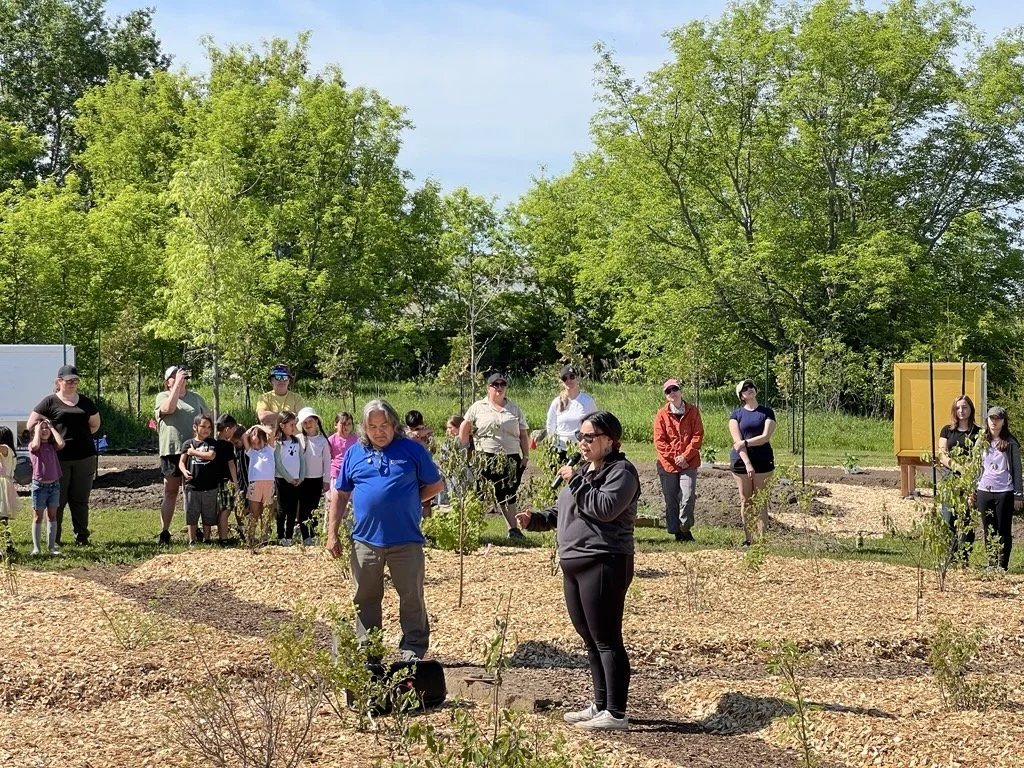
The site’s design, guided by Indigenous knowledge and Western ecological science, reflects the teachings of the Medicine Wheel and includes several hundred culturally significant trees, shrubs, and plants. A Three Sisters Garden—corn, beans, and squash—is planted annually by local high schools and schools from Akwesasne, accompanied by traditional drumming and ceremony.
The site’s circular signage, featuring partner logos displayed in an equal ring, symbolizes shared leadership and balance in decision-making. The project is collaboratively supported and funded
through the Healing Place Working Group and South Nation Conservation’s member municipalities, demonstrating a shared commitment to reconciliation, environmental restoration, and community well-being.
Since its creation, The Healing Place has continued to expand through new partnerships, annual plantings, ceremonies, and educational activities led by youth and Indigenous knowledge keepers. It demonstrates how conservation areas can become spaces for reconciliation, learning, and healing—where restoring ecosystems and relationships go hand in hand.
Challenge or Issue:
Before The Healing Place began, conservation and reconciliation often existed in separate spaces. The challenge was to unite Indigenous and non-Indigenous partners to co-create something that embodied both: a shared place of healing, learning, and ecological restoration. We had to build trust, bridge worldviews, and ensure cultural teachings and ceremony guided every decision. The process transformed traditional project delivery into a relationship-based model for conservation grounded in ceremony, reciprocity, and mutual learning—demonstrating how environmental stewardship can also be an act of relationship renewal and collective healing.
Pillar Category: PEOPLE
The Healing Place was realized through deep collaboration among Indigenous and non-Indigenous partners via the Eastern Ontario First Nations Working Group, South Nation Conservation, Forests Ontario, Forests Canada, Ontario Power Generation, TD Friends of the Environment, member municipalities, and local schools. The governance model is grounded in Algonquin and Haudenosaunee traditions of ceremony, consensus, and respect. Indigenous Elders and youth shared cultural teachings; conservation staff contributed ecological expertise; and schools mobilized students to learn through action. This consensus-based approach, guided by ceremony rather than hierarchy, has since informed how partners engage in other shared land and stewardship projects.
Successes and Achievements: The Healing Place represents a living expression of reconciliation—where culture, community, and conservation meet.
People: More than 1,000 participants have taken part in ceremonies, plantings, storytelling, and educational events. Each gathering begins in ceremony, honouring the land, ancestors, and teachings, ensuring stewardship remains rooted in respect and relationship. Events are multilingual—held in English, French, Mohawk (Kanien’kéha), and Algonquin (Omàmìwininìmowin / Anishinàbemowin)—creating shared understanding and inclusion.
Planning: Guided by Indigenous knowledge, the site’s design follows the Medicine Wheel’s four directions and pillars of life: mental, spiritual, emotional, and physical. Indigenous teachings informed species selection, signage design, and engagement. The circular format of all interpretive signage reflects equality and shared purpose among partners.
Places: Several hundred culturally significant trees, shrubs, and native plants have been planted following a design by Indigenous environmentalist Chris Craig. The Three Sisters Garden—planted each spring by students from Akwesasne and nearby schools—embodies food sovereignty, language preservation, and curriculum-linked learning in partnership with local school boards.
Funding from multiple partners has leveraged thousands of volunteer hours and in-kind support, strengthening collective impact. The Healing Place will continue to evolve as a teaching landscape and gathering space, guided by Indigenous leadership and community stewardship—a true model of innovation in conservation.