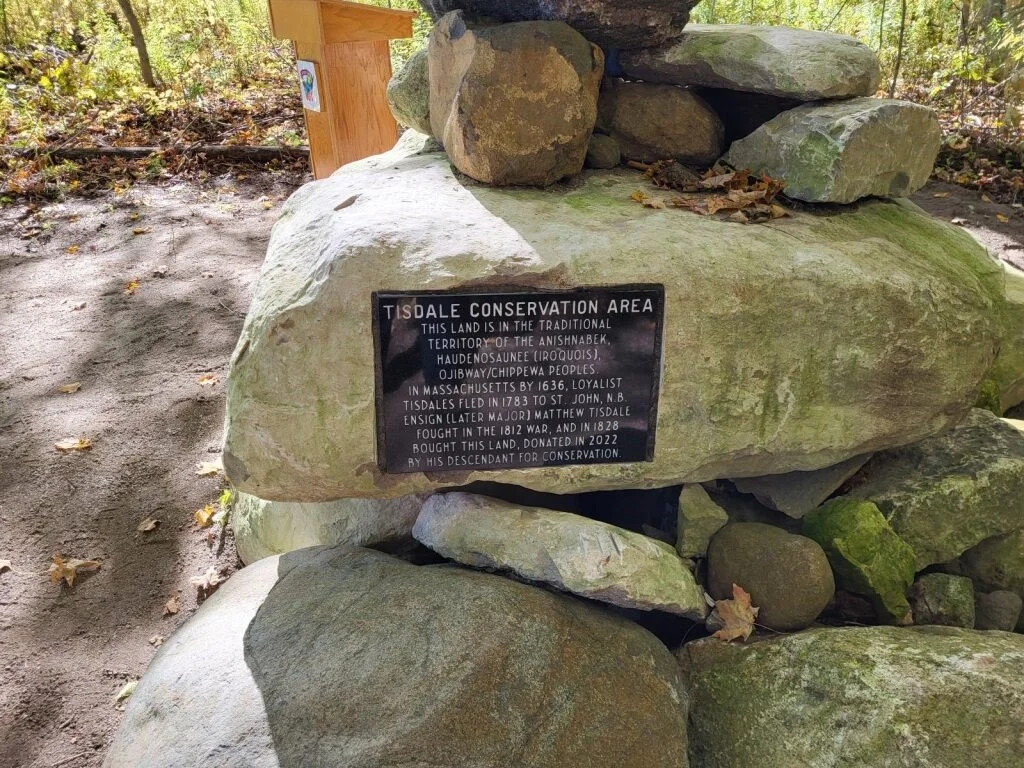
Tisdale Conservation Area
Submitted by: Catfish Creek Conservation Authority
About the Project: The 50.19 acre Tisdale Conservation Area, owned and managed by the Catfish Creek Conservation Authority (CCCA), is a prime example of how donated land can be transformed into a protected natural space for both environmental preservation and public enjoyment. Originally donated with the intention of conserving its natural features, the Tisdale property has since been carefully stewarded to support native ecosystems, protect wildlife habitat, and provide accessible green space for the community.
Nestled within the Catfish Creek watershed, the area features a mix of forested trails, meadows, and wetlands that play a vital role in maintaining regional biodiversity. It offers a quiet refuge for a variety of wildlife, including deer, songbirds, amphibians, and pollinators. The CCCA has worked diligently to preserve the ecological integrity of the site, while also creating opportunities for low-impact recreation such as hiking, birdwatching, photography, and environmental education.
The Tisdale Conservation Area stands not only as a peaceful escape into nature, but also as a testament to the lasting impact of land conservation partnerships.
Through the foresight of the original land donors and the stewardship of the Catfish Creek Conservation Authority, this area will remain protected for future generations to explore, appreciate, and enjoy, a living legacy that balances ecological preservation with community connection to the natural world.
Challenge or Issue: The donation of the Tisdale property came with several challenges. One major concern was ensuring long-term ecological protection while making the land accessible to the public. Initial assessments revealed areas affected by invasive species and past land use, requiring careful restoration planning. Funding for maintenance, signage, and trail development posed another hurdle, as ongoing stewardship costs were not included in the donation. Additionally, balancing public access with conservation goals required thoughtful infrastructure placement to avoid disrupting sensitive habitats. Despite these challenges, collaboration between the Catfish Creek Conservation Authority and community partners helped overcome obstacles and realize the land’s full potential.
Pillar Category: PLACES
The donation of the Tisdale property sparked meaningful environmental impact and innovative conservation practices. It expanded the Catfish Creek Conservation Authority’s protected lands, enhancing habitat connectivity and biodiversity within the watershed. The site became a model for balancing ecological preservation with public engagement, using sustainable trail design and low-impact infrastructure to minimize disturbance. Innovative restoration techniques, including native species planting and invasive species management, revitalized degraded areas. Ultimately, Tisdale became a catalyst for conservation innovation and a valued natural space for all.
Successes and Achievements: The Tisdale Conservation Area stands out as a landmark project that has made a significant and lasting impact on conservation and preservation efforts within the Catfish Creek watershed. By converting donated land into a protected natural space, the project effectively safeguarded critical habitats, including woodlands, and meadows, which serve as vital refuges for diverse plant and animal species. The site’s thoughtful restoration initiatives, such as invasive species control and native planting have revitalized degraded ecosystems, improving biodiversity and watershed health. Moreover, the project excelled in community engagement by creating accessible trails that foster a deep connection between people and nature, inspiring stewardship and ongoing conservation efforts. The innovative planning balanced ecological integrity with public enjoyment, demonstrating sustainable land management practices that serve as a replicable model for other conservation authorities. Overall, the Tisdale Conservation Area project exemplifies impactful conservation by preserving important natural landscapes, enhancing ecological resilience, and inspiring collective action toward environmental preservation.