

Sensory Medication Grove & Accessible Water Fronts
Grand River Conservation Authority
Project Description
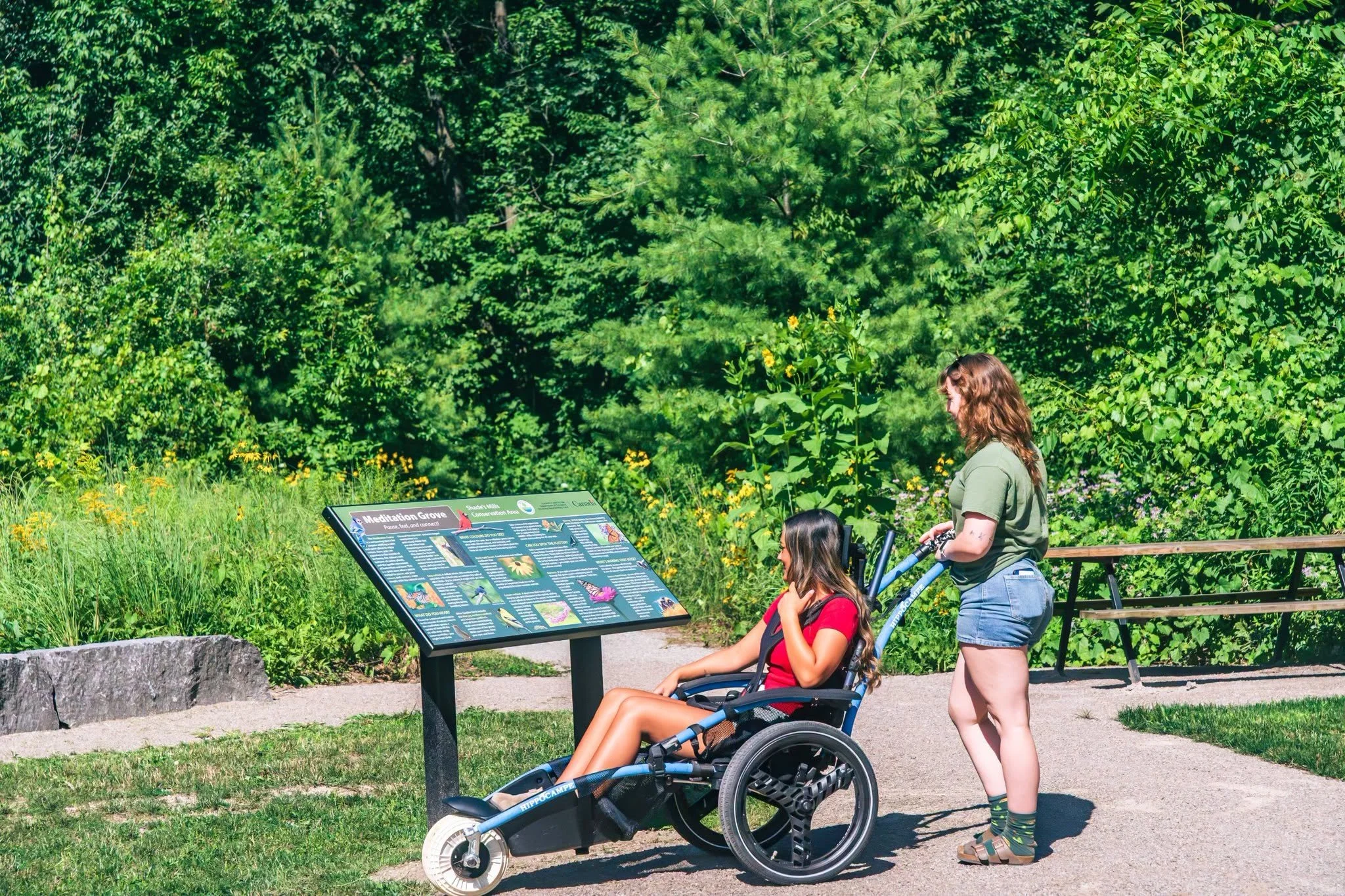
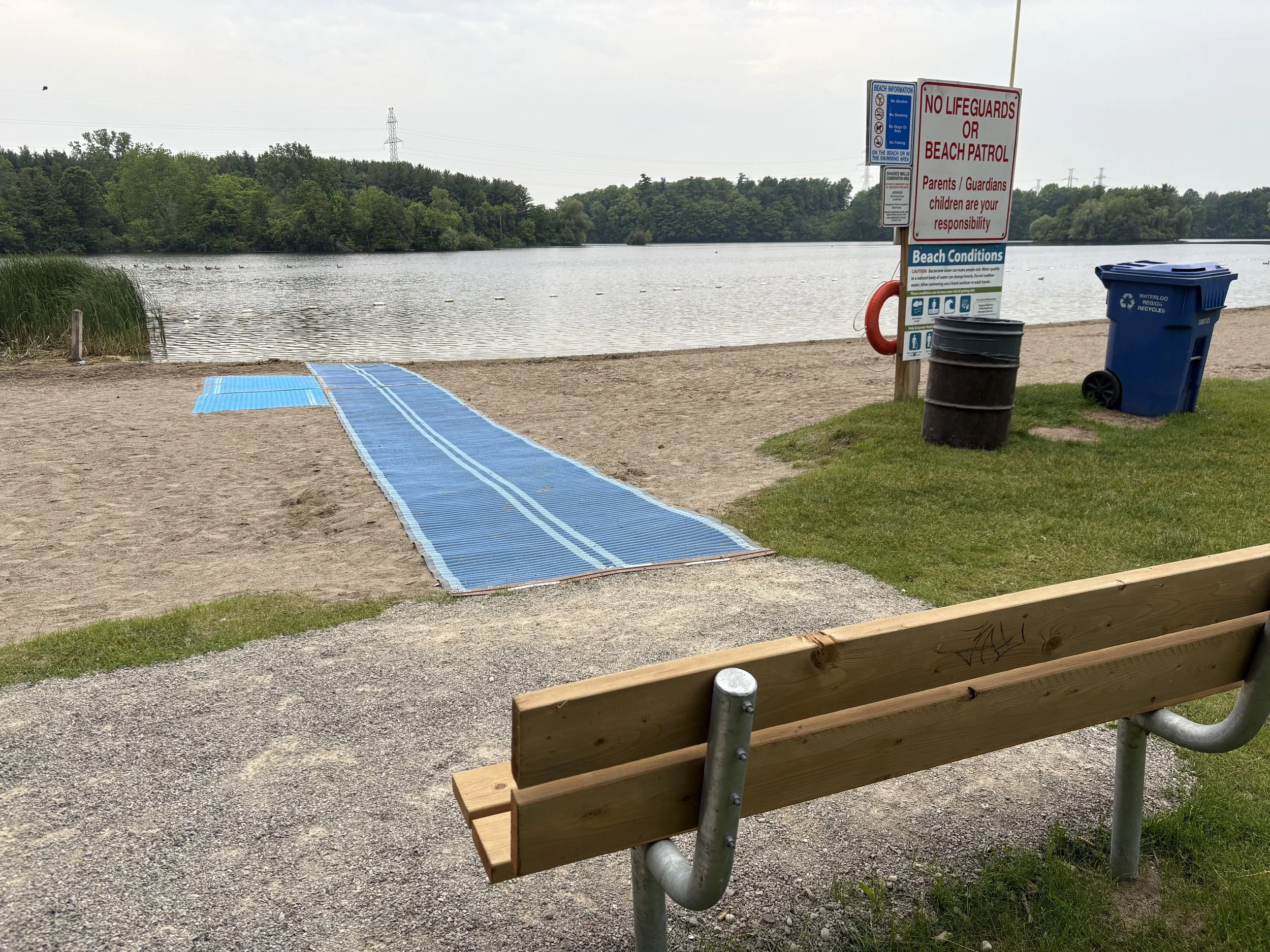
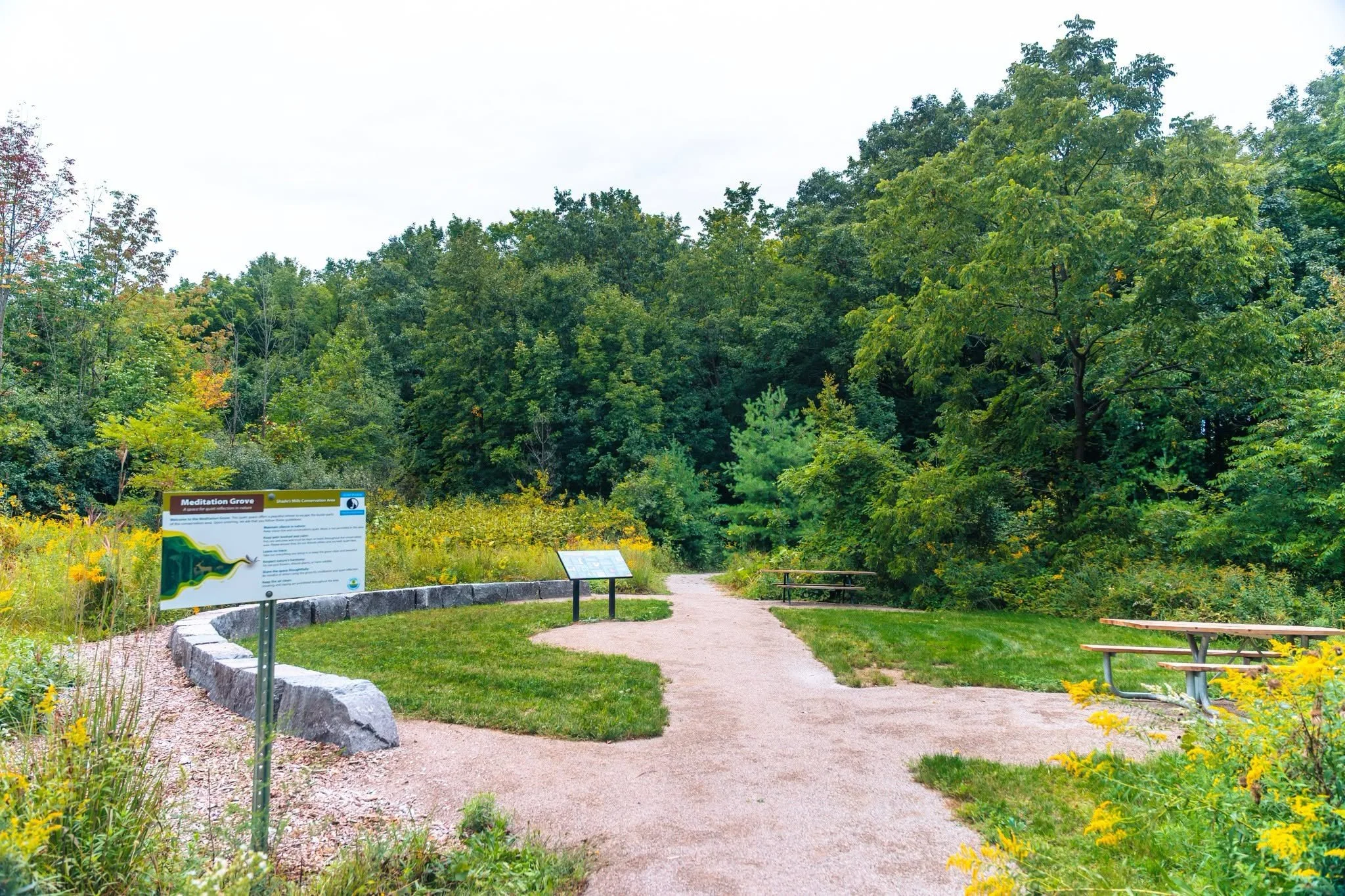
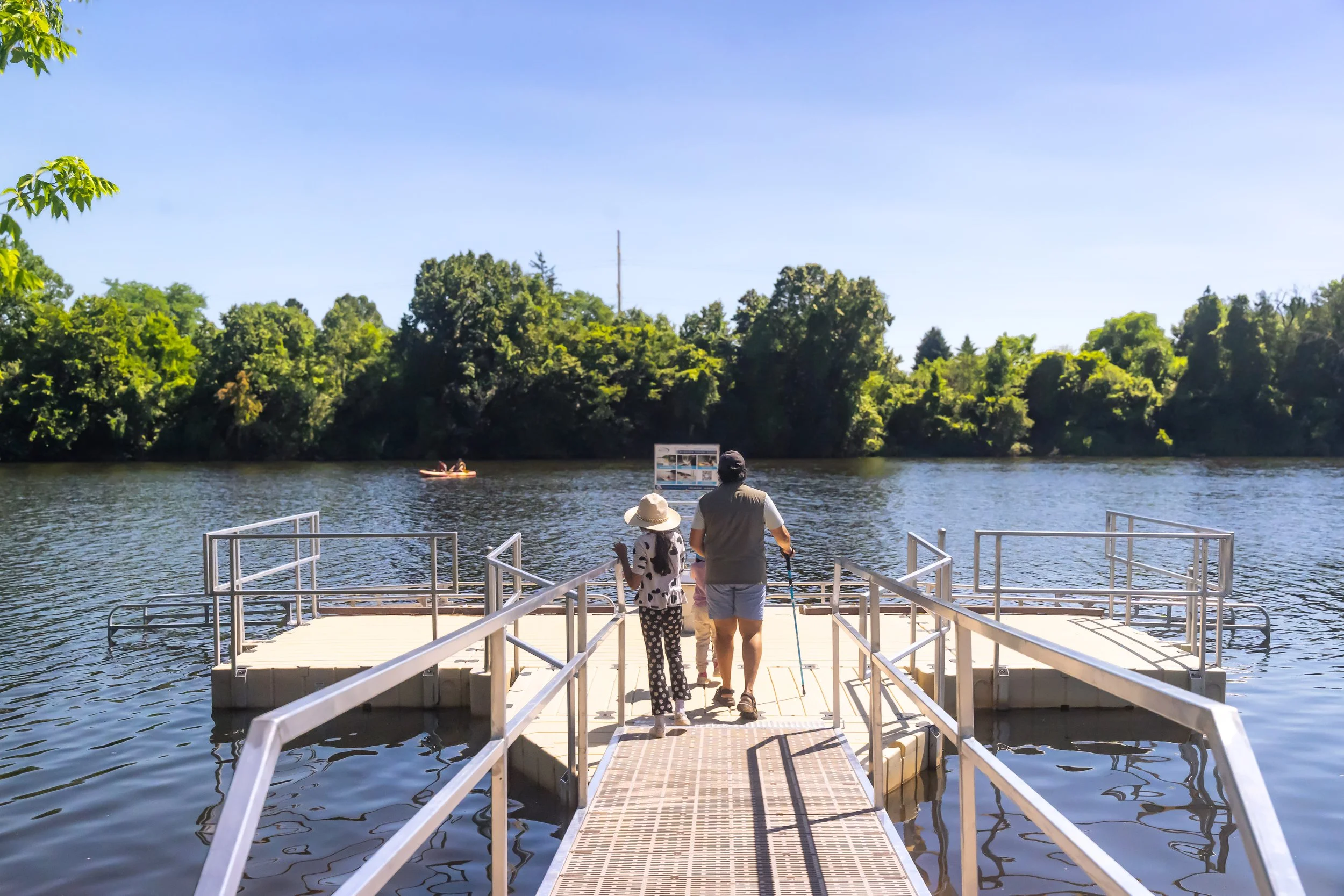
After a successful application to the Government of Canada's Enabling Accessibility Fund, a series of accessibility improvements were implemented at Shade's Mills Conservation Area in Cambridge, Ontario. The project included the installation of a beach access mat, an accessible canoe and kayak launch, floating and all-terrain wheelchairs, accessible route upgrades, enhanced trail signage, and the creation of a soft-sensory Meditation Grove featuring a 270-metre barrier-free trail loop and pollinator garden.
Together, these improvements have expanded opportunities for people with disabilities and mobility limitations to participate in a wide range of outdoor recreation experiences, including swimming, paddling, hiking, nature appreciation, and quiet reflection.
A key component of the project was its collaborative planning process. Extensive consultation with the public, people with lived experience, and the Cambridge Accessibility Advisory Committee helped identify barriers, understand visitor needs, and inform project priorities. Feedback gathered throughout the planning and design phases led to refinements that improved functionality and user experience, ensuring the project addressed real-world needs rather than simply meeting minimum accessibility standards.
Completed in early 2026, the project demonstrates how thoughtful planning, meaningful community engagement, and strategic investment can create more inclusive outdoor spaces. The approaches and lessons learned through this initiative have also helped establish a framework for future accessibility improvements across the broader conservation area system.
Challenge / Issue and Solution
Like many conservation areas and natural spaces, Shade's Mills Conservation Area faced known physical and informational barriers that made it more difficult for people with disabilities and mobility limitations to enjoy and participate in outdoor recreation opportunities. Existing amenities did not always support equitable access to activities such as swimming, hiking, and paddling. Through a collaborative planning process involving GRCA staff, accessibility advocates, community stakeholders, and people with lived experience, the project identified key barriers and developed an informed plan to improve accessibility, foster inclusion, and create a more welcoming experience for all visitors
PLANNING: Provide a description of how you planned, prepared and implemented your project
The project began with a review of existing barriers and opportunities to improve accessibility at Shade's Mills Conservation Area. Once funding was secured, the GRCA consulted with the public, the Cambridge Accessibility Advisory Committee, and individuals through online surveys, presentations and media releases. The aim was to gather feedback from users with lived experience on the proposed products, design and placement to better understand visitor needs. Input received through this process helped shape project priorities and design decisions, ensuring the final plan was informed by lived experience and responsive to the needs of the local community..
Describe the overall outcome and success of your project, noting your achievements in innovation and inspiration in PEOPLE, PLANNING and PLACES
The Shade's Mills Accessibility Project demonstrates how meaningful consultation and planning can lead to more inclusive and accessible outdoor recreation opportunities. Throughout the project, GRCA staff worked with accessibility advocates, community stakeholders, and individuals with lived experience to better understand barriers and identify practical solutions. Consultation with the public and Cambridge Accessibility Advisory Committee helped refine the design and ensure improvements reflected real user needs.
The project resulted in a variety of accessibility improvements that increased opportunities for people with disabilities and mobility limitations to participate in activities such as swimming, paddling, hiking, and nature appreciation. It also established a foundation for future accessibility projects at other conservation areas.
The success of the project is reflected in the positive response from the community. Local residents who rely on mobility aids have expressed appreciation for the ability to enjoy the conservation area with family and friends; while Community Living groups frequently travel to Shade's Mills to use features such as the accessible wheelchairs and improved beach access. The project was also recognized in local publications and magazines, highlighting the GRCA's commitment to creating more accessible and inclusive outdoor spaces. Overall, the project demonstrates how collaboration, community input, and informed planning can create lasting benefits for visitors.